Laman ini menggunakan cookies untuk memastikan Anda mendapatkan pengalaman terbaik. Informasi lebih lanjut perihal informasi yang dikumpulkan dan digunakan silakan lihat Kebijakan Cookie dan Kebijakan Privasi
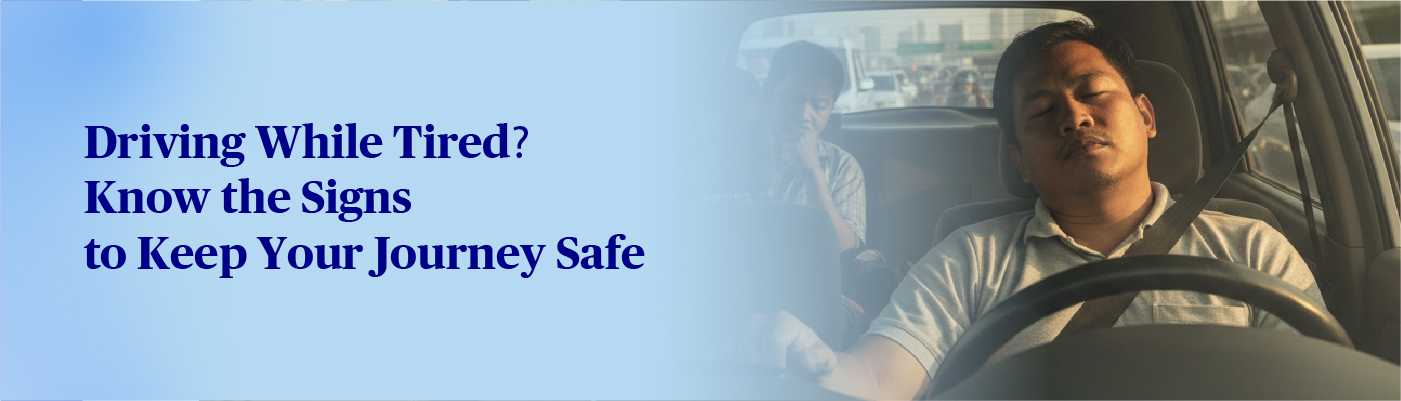
Many of you reading this article may already be planning a homecoming trip using a personal vehicle, especially a car. As part of the essential preparations, it is important for you to recognize the signs of fatigue while driving, so you can take a break immediately and reduce the risk of accidents that may occur during the journey.
Even though driving may seem like simply sitting behind the wheel, anyone who has ever taken a long trip knows how physically demanding it can be. Fatigue often strikes in the middle of the journey and can significantly reduce your level of concentration.
The result is unfocused driving, which can increase safety risks for both you and all passengers in the vehicle. This is why it is important to recognize the signs of driver fatigue and take a break at the right time before it becomes too late.
Read Also: 7 Effective Ways to Overcome Motion Sickness When Solo Backpacking
What Is Driver Fatigue?
Driver fatigue, often referred to as fatigue driving, is a condition that occurs when a driver experiences reduced awareness, concentration, and physical reaction due to severe drowsiness.
Several studies have even shown that driving while fatigued can be just as dangerous as driving under the influence of alcohol. Its causes can vary widely, and this condition may increase the risk of traffic accidents by up to 20 times.
Signs and Early Indicators of Driver Fatigue
The signs of fatigue driving can often be recognized through simple cues that you may feel directly while on the road. Some of the early signs and indicators include the following.
1. Heavy Eyes and Frequent Yawning
The first sign is struggling to keep your eyes open and frequent yawning. This happens because the body begins to feel exhausted after driving for a long period. It can occur due to reduced oxygen intake combined with muscle stiffness from staying in the same driving position for too long.
If your eyes start to feel too heavy to keep open or begin to feel sticky, it is best to pull over or take a break immediately.
2. Erratic Driving Behavior
Erratic driving is another sign that your concentration is declining. Sudden acceleration, unstable braking, or unusually aggressive overtaking are clear indicators that you are starting to feel fatigued.
These signs of driver fatigue can also be noticed by family members or travel companions who often accompany you.
3. Difficulty Keeping Your Head Upright and Brief Moments of Sleep
When you are driving and find it hard to keep your head upright, the signs of fatigue have become very clear. Without realizing it, you may even experience microsleep, which is a brief moment of sleep and loss of awareness lasting only fractions of a second.
This significantly increases the risk of accidents because, during those moments, you are essentially asleep and your body’s reaction stops, even if only for a few seconds.
In fact, when you experience these three signs of driver fatigue, you should immediately pull over and take a rest. If you need to continue the journey, it is highly recommended to switch drivers with someone else, allowing your body to get the recovery time it needs.
Read Also: Detect Your Vehicle’s Blind Spot and Understand the Danger!
The Impact of Driver Fatigue and Factors That Increase Its Risk
When fatigue sets in, your ability to drive safely is significantly disrupted. Your physical condition declines noticeably, including slower reflexes, reduced awareness of your surroundings, and decreased ability to recognize objects ahead or through the vehicle’s mirrors.
The result is a drastic decline in coordination and a loss of concentration. If you force yourself to continue driving, the worst possible outcome is a serious safety risk for you as the driver and for everyone inside the vehicle.
It is important to recognize this so you understand how crucial it is to take a break when the signs of driver fatigue begin to appear and become difficult to ignore. There are also several factors that can further increase the likelihood of experiencing this condition.
● First, lack of rest before driving. This is the main factor because drowsiness is a sign that the brain and body are not in an ideal condition.
● Second, excessive work or activities that place a heavy burden on the body and mind, requiring more rest than what has been taken.
● Third, health factors. Certain medical conditions can increase the risk of experiencing driver fatigue. Taking medication with drowsiness‑inducing side effects can also heighten this risk.
● Fourth, consumption of foods or drinks that trigger drowsiness while driving, which can actually be avoided by choosing better meal options.
● Fifth, boredom during long stretches of monotonous roads, which causes the brain to become less active in processing the driving task.
The Body’s Safe Limits While Driving
Naturally, the body always gives clear signals when it needs rest. Our metabolism functions in an incredibly sophisticated way, so when conditions are no longer optimal, your body will send warnings that appear in various forms.
The simplest sign appears when your eyes feel heavy and drowsiness becomes difficult to fight. This condition serves as a clear limit for you to start looking for a rest area or to switch drivers so you can take a break.
The second sign is decreased concentration and difficulty staying focused on the road. While driving, your eyes naturally focus on what lies ahead and scan the surroundings. When your vision begins to lose focus, it is your body’s way of signaling that it needs rest.
The next sign is slower reactions to situations on the road. This can be seen through sudden or harsh braking, steering movements that feel jerky or surprising, and being startled by things that are actually quite visible and easy to anticipate.
Another important sign to pay attention to is the onset of stiffness in the neck and back muscles. When these indicators appear, it is time for you to stop for a moment and rest to relax your body and restore full alertness.
The Importance of Maintaining Your Physical Condition While Driving
Preparing your car to be in optimal condition must be balanced with preparing your body to be in an ideal state as well. This ensures that you can drive long distances without experiencing the signs of driver fatigue.
According to various sources, the ideal duration for long‑distance driving is around four consecutive hours when the body is in good condition. After this period, it is recommended to take at least a 30‑minute break before continuing the trip.
As for the total daily driving limit, the ideal duration ranges from eight to ten hours per day. This guideline is based on Law No. 22 of 2009, which advises that drivers should not drive for more than eight hours in a single day.
Driving with full concentration allows your journey to be safer and more comfortable. Equipping yourself with insurance is also something you should never overlook, along with ensuring proper protection for your vehicle.
Reliable Vehicle Insurance is essential because it can serve as a safety net if something unexpected happens on the road, including incidents triggered by driver fatigue.
Read Also: Simple Tips for Safe and Correct Car Parking for Beginners
AXA Insurance Indonesia fully understands the importance of protection for both your family and your vehicle. While personal insurance can be obtained through one of AXA Insurance Indonesia’s products, you can also use SmartDrive Insurance to provide protection for the vehicle you drive.
After recognizing the signs of driver fatigue above, it is ideal for you to ensure maximum protection for yourself, your family, and the vehicle you use. The risks on the road are always present and can appear at any moment if these signs are ignored, which is why having the right protection from AXA Insurance Indonesia becomes a sensible choice.
Get the SmartDrive Insurance product now for comprehensive protection for your car during the trip and while you are in your hometown, and prepare yourself as best as possible before taking a long journey for everyone’s safety!

Reference: