Laman ini menggunakan cookies untuk memastikan Anda mendapatkan pengalaman terbaik. Informasi lebih lanjut perihal informasi yang dikumpulkan dan digunakan silakan lihat Kebijakan Cookie dan Kebijakan Privasi
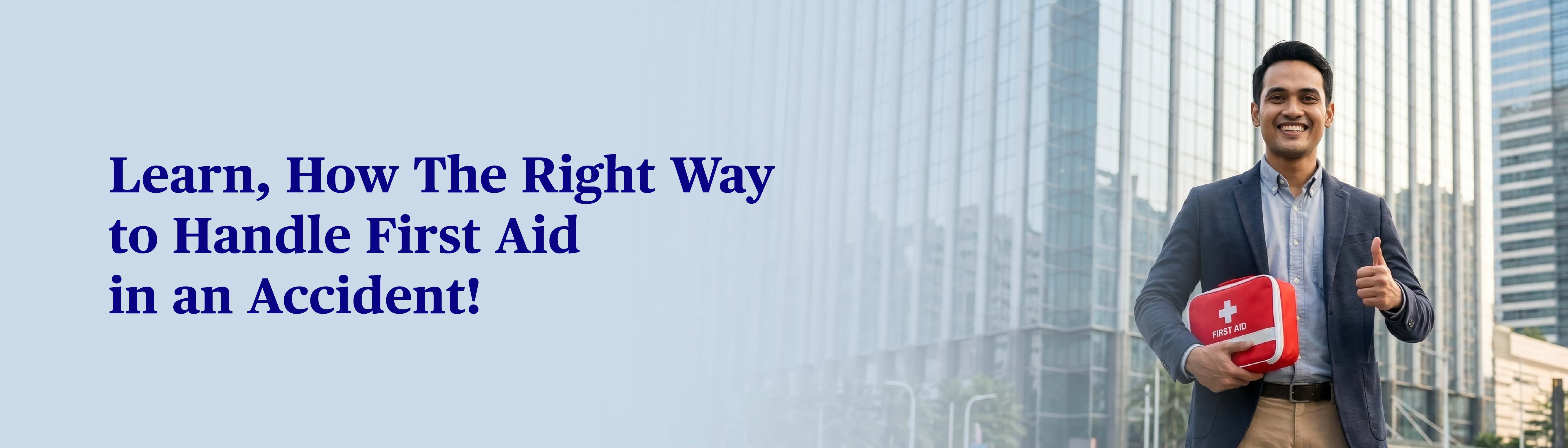
Understanding first aid actions for workplace accidents is something everyone in the area should ideally possess. This knowledge is essential to prevent more severe injuries when an accident actually occurs.
Further explanations regarding the types of workplace accident risks can be found in the related article linked in the next section. In this article, the focus is directed toward what can be done as first aid measures, ensuring they are safe and aligned with proper First Aid (P3K) procedures.
In principle, providing first aid to accident victims in the workplace must adhere to the fundamental principles of first aid itself. These principles include:
With these three principles in mind, the following are the steps that can be taken as first aid in a workplace accident to ensure safety and compliance with SOPs.
Relating Reading: Got a Sports Injury? Learn the Types & How to Handle Them Safely
1. Assess the Situation and Location Safety
Referring to the first principle, ensure you can assess the condition and situation of the accident site. Check whether there are any remaining safety risks or potential secondary accidents. If the area appears safe, you may proceed with the next steps.
2. Evaluate the Victim’s Condition
Approach the victim and perform a detailed assessment. Check the victim’s level of consciousness, their breathing, and their pulse—either on the wrist or the neck.
If the victim is unconscious or not breathing, perform CPR only if you are trained to do so.
3. Provide the Necessary Initial Aid
After assessing the victim’s condition, administer the appropriate first aid. For example:
4. Immediately Contact Medical Facilities
Call medical personnel or the nearest hospital that can reach the victim at the accident site. This is crucial, especially when the victim has serious injuries and requires immediate professional medical assistance.
Use the company’s prepared emergency contact list and clearly communicate the victim’s condition to the medical team.
5. Report and Document the Incident
Everything that has occurred must be documented and reported to the appropriate medical personnel. The report should include what happened, what caused the injury, what injuries were identified and documented, and what first aid measures were provided before medical responders arrived to take over.
Relating Reading: Pilates: Get to Know the Workout Loved by Today’s Urban Lifestyle
Assess the Condition and Ensure First Aid Can Be Given to Reduce Injury Risks
First aid can generally be administered for specific types of injuries. In cases of severe or critical conditions, it is always recommended to immediately contact professional medical personnel so the victim can receive proper treatment.
There are typically around seven conditions in which first aid can be provided to help reduce the risk of more serious injuries, including:
Each condition requires a different approach and a specific method of handling. This is why it is important for everyone to clearly understand what actions should be taken—or at the very least, know who to contact when such emergencies occur—to help minimize potential risks.
Ensure the First Aid Kit Is Complete and Properly Stored
A first aid kit is one of the most essential tools for providing immediate assistance during workplace accidents. Naturally, its contents must be complete and in good condition to deliver fast and effective treatment when needed.
A standard first aid kit typically contains adhesive bandages, sterile gauze, rolled bandages, elastic bandages, alcohol swabs, cotton, scissors, medical gloves, rivanol, and povidone iodine. All items should be stored properly, kept in ready‑to‑use condition, and easy to access at any time.
When storing a first aid kit, four key points must be considered:
By doing so, every tool and medical supply stored inside the first aid kit will always be ready for use whenever a workplace accident occurs in your area.
Complete Your Protection with the Right Personal Accident Insurance
The risk of workplace accidents is always present — whether at a low or high percentage — depending on the work environment and the safety standards provided. In addition to understanding the basic principles of first aid and equipping yourself with the necessary tools, you should also have reliable Personal Accident Insurance.
Ideally, such insurance should provide benefits for various risks that arise due to an accident, including workplace accidents. The compensation you receive will help cover the losses you experience, allowing you to focus on recovery instead of worrying about medical expenses.
Relating Reading: 5 Potential Workplace Hazards: Choose Insurance for Maximum Protection!
The Personal Accident Insurance being referred to is SmartActive Personal Accident Insurance from AXA Insurance Indonesia. This insurance can be obtained directly through the official website where you are reading this article, or by contacting our customer service team. With this, your understanding and knowledge of first aid will be even more complete, supported by maximum protection from insurance should something unfortunate truly occur in your workplace.
Reference: